
Driving in the Dominican Republic: What Tourists Get Wrong
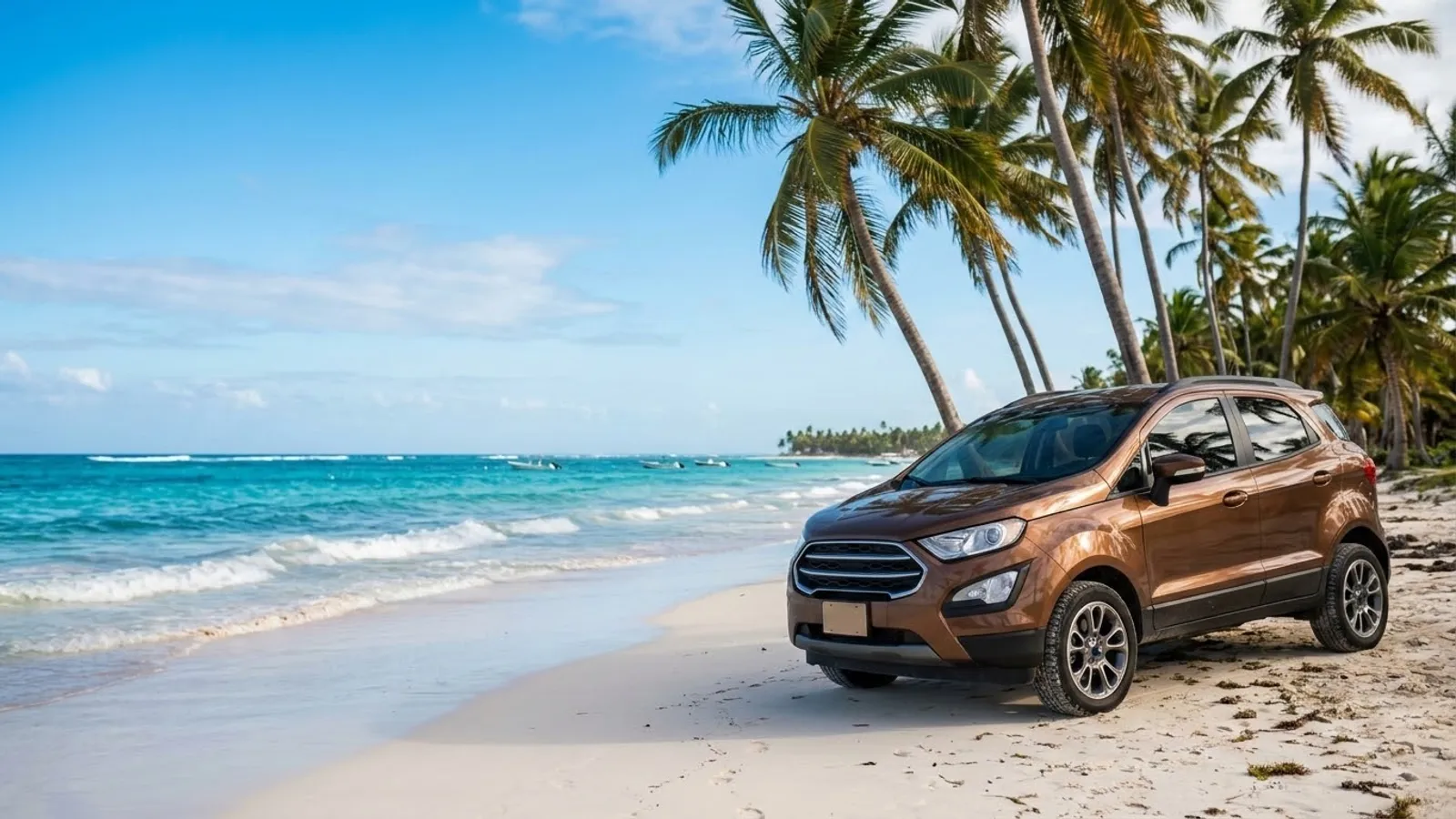
Most of what’s written in English about driving in the Dominican Republic is either a warning written by somebody who never came, or a brochure written by somebody selling cars. The truth is duller than both. It’s a country where the motorways are good, the village roads aren’t, and about six specific local habits account for nearly every problem a visitor has.
I’ve driven here since 2006 and I rent cars to visitors in Punta Cana, so I get the debrief afterwards, including the bad ones. Here’s what actually catches people.
Reserve your Punta Cana rental car with Vroom Do: Get a quote on WhatsApp
Should you drive here at all
Honest answer: it comes down to one thing. Are you comfortable driving somewhere the rules are only partly written down?
The country’s road fatality rate is among the worst in the world, and it would be dishonest to bury that. It’s also worth knowing what drives the number: the overwhelming majority of those deaths are motorcyclists, frequently without helmets, frequently at night, and often on rural roads. That is a different risk profile from a tourist in an insured car on the Coral highway at two in the afternoon. Fatalities dropped by about a third in 2025 against 2024, which suggests enforcement is finally biting.
Drive if you’re a confident driver who wants to leave the resort, if you’re travelling with children whose nap schedule doesn’t respect a shuttle timetable, or if any part of your plan involves Santo Domingo, Samaná or the mountains.
Don’t drive if this is your first time behind the wheel outside your own country, if you’re staying inside one all-inclusive the whole week, or if you land after dark on your first night. That last one is worth taking seriously. Arriving at PUJ at 23:00 and immediately driving an unfamiliar car down an unlit road to Uvero Alto is the single worst introduction to this country, and a transfer that night plus a car the next morning solves it for about twenty-five dollars.
The six things that actually catch people
Not potholes. Potholes are visible. These aren’t.
Speed bumps. Called policías acostados here, lying-down policemen, and the name is affectionate rather than descriptive. They are tall, frequently unpainted, and very often positioned just past a bend or at a village entrance where you’d have no reason to expect one. Hit one at 60 and you will damage the car. Slow down at every village boundary and every school, whether or not you can see a reason.
Motorbikes. They filter from both sides, pass on the right, carry three people and a gas bottle, and treat a red light as advisory. This isn’t recklessness so much as a different set of conventions, and the practical adaptation is to check your right mirror before any right turn, every time.
Unlit everything at night. Motorbikes without lights, pedestrians in dark clothing, dogs, plus the occasional horse, all using the hard shoulder as though it were pavement.
The horn. A short beep here means “I’m here” or “I’m coming past”. It’s information rather than aggression, and visitors who read it as hostility spend the week feeling attacked by a country that’s just talking to them.
Pedestrian crossings barely exist outside main junctions, so people cross wherever they are standing. Assume anyone on the verge is about to step out.
Right of way in practice belongs to trucks and guaguas, the public minibuses. Legally arguable, physically settled. Let them through.
Those six between them explain nearly every incident I’ve had to deal with in years of renting cars to visitors, and there’s a pattern worth naming: not one of them is about speed on a highway. They are all about the first second of an unexpected situation on an ordinary road — a bump nobody painted, a bike where you didn’t look, a person stepping off a verge with a raised hand. The single habit that covers all six is leaving more space and accepting that you will arrive slightly later than you planned. Drivers who do that have uneventful weeks. Drivers trying to hold to a schedule they set in another country are the ones who end up phoning me.
Documents
Straightforward, but turning up without them turns a thirty-second checkpoint into an afternoon.
Bring your home driving licence, which is valid here for 90 days. The legal driving age is 18, but rental companies set their own floor at 21, with surcharges or category restrictions under 25. An International Driving Permit is needed only if your licence isn’t in the Latin alphabet, and you must obtain it at home; there is no way to get one here.
Bring your passport, both for the rental and for roadside checks. Keep the rental agreement and insurance papers in the car rather than in the hotel safe.
By law every car must carry a first aid kit and a fire extinguisher. Check both are actually present when you collect it, because that’s your problem at a checkpoint, not the rental company’s.
The blood alcohol limit is 0.05%, checks do happen, and the only workable policy on a holiday where rum is everywhere is that whoever is driving doesn’t drink at all.
No exceptions on that one.
Roads, by type
| Where | What it’s like |
|---|---|
| Toll autopistas (Coral, Este, Duarte) | Genuinely good. Multi-lane, well surfaced, properly engineered. Limited lighting at night |
| Main tourist corridors around Bávaro and Cap Cana | Fine, busy at resort check-in and check-out hours |
| Secondary roads | Mixed. Potholes, faded markings, unmarked bumps |
| Rural and mountain roads | Narrow, sometimes unpaved, occasionally washed out after rain |
| Central Santo Domingo | Dense, fast, narrow in the Colonial Zone. Park on the edge and walk |
Mobile coverage drops in the interior. Download the offline map before you go, not after you’ve lost signal.
Speed limits and tolls
| Zone | Limit |
|---|---|
| Urban residential | 40 km/h |
| School and church zones | 20 km/h |
| Rural roads | 60–80 km/h |
| Major autopistas | up to 120 km/h |
Tolls are cash only. No cards, no app, no exception I have ever found in twenty years. Each booth takes roughly RD$60 to RD$400 depending on the road, and the full Santo Domingo to Punta Cana run costs about RD$400 to RD$600 one way. Keep small notes in the door pocket, because handing over a RD$2,000 note at a booth is how you learn the word for “no change”.
Fuel stations are bombas. They’re full service, so you stay in the car and say “lleno” for a full tank. Common along the coast and in the towns, thin on the ground toward Jarabacoa and on the Samaná road, so fill up before the empty stretch rather than during it. Most take cards; some inland ones don’t.
Police checkpoints
You will be stopped. It’s routine and usually over inside a minute.
I get asked about this more than about anything else on this page, almost always by people who have read something alarming, so let me be plain about what my customers actually report back. In six years I have had exactly two calls about a checkpoint going badly, both resolved with a phone call, and several hundred rentals where nobody mentioned it because nothing happened. The officer wants to see that the car is legally rented and legally insured and that you are legally allowed to drive it. Have the three documents to hand instead of buried in a suitcase in the boot, greet the person, and the encounter is shorter than a petrol stop.
AMET handles urban traffic and DIGESETT the highways. They check licence, rental papers and insurance. Stay in the car unless asked otherwise, keep your hands visible, stay friendly, and hand over the documents.
If a fine is raised, ask for the official written citation. That is the entirely normal request and it changes the nature of the conversation. Don’t settle anything in cash at the roadside, and call your rental company if there’s confusion; ours answers on +1-829-432-7755.
If something happens
Stop, hazards on, then leave the cars where they are unless they’re creating genuine danger. Moving them to be courteous about the traffic is the well-meant act that most reliably complicates an insurance claim, because the police report is written from the positions they find.
Photograph everything: both vehicles, the damage, the road, the other driver’s papers. Call 911, then call us.
Don’t arrange repairs yourself. On a nearly new car, unauthorised work voids the manufacturer warranty and that comes out of your deposit.
Insurance, without the vagueness
Local liability cover is legally required on the vehicle here and your credit card does not provide it. What your card may cover is collision damage to the rental car itself, and it almost always works by reimbursement: you pay first, then claim with a police report, contract, invoice and photographs.
The number to ask about isn’t the deposit, it’s the deductible, because that’s your actual exposure. Ours are deliberately identical: $200 on a Kia Picanto or Rio, $300 on the SUVs and larger cars, with insurance, taxes and unlimited mileage inside the daily rate.
Photograph the car before you drive it. All four corners, the wheels, the windscreen straight on, the dash with fuel and odometer showing, the interior, plus the spare. Ninety seconds, every rental, everywhere in the world.
Where to actually go
| From Punta Cana | Drive | Road |
|---|---|---|
| Macao Beach | 30–45 min | Paved, easy |
| Higüey (Basílica) | ~1 hour | Paved |
| Bayahíbe | 40–60 min | Paved |
| Miches | 1.5–2 hours | Mixed, rural sections |
| Santo Domingo | 2–3 hours | Toll highway |
| Samaná Peninsula | 4–5 hours | Highway then secondary |
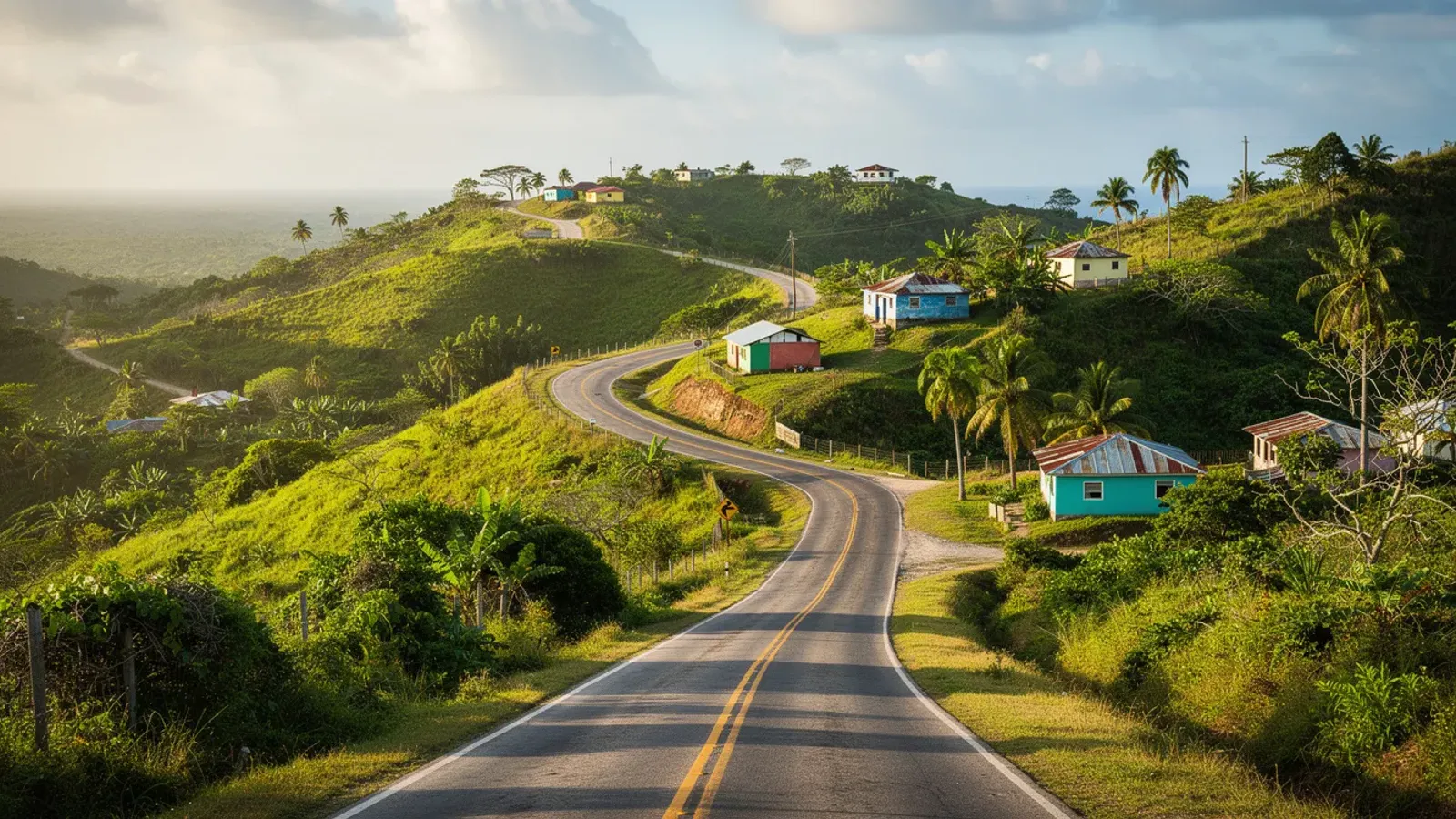 A two-lane road through the hills. This is the good version of a secondary road.
The loop I’d suggest for a week: Punta Cana, Bayahíbe, La Romana for Altos de Chavón, Santo Domingo for two nights, back on the highway. Park on the edge of the Colonial Zone and walk it; the streets inside are sixteenth-century width and were not designed around a rental SUV. There’s a separate piece on things to do in Santo Domingo.
For confident drivers with more time, Jarabacoa for rivers and mountains, or Samaná for whale watching between January and March. Both mix good highway with slow rural road, so add an hour to whatever the map says.
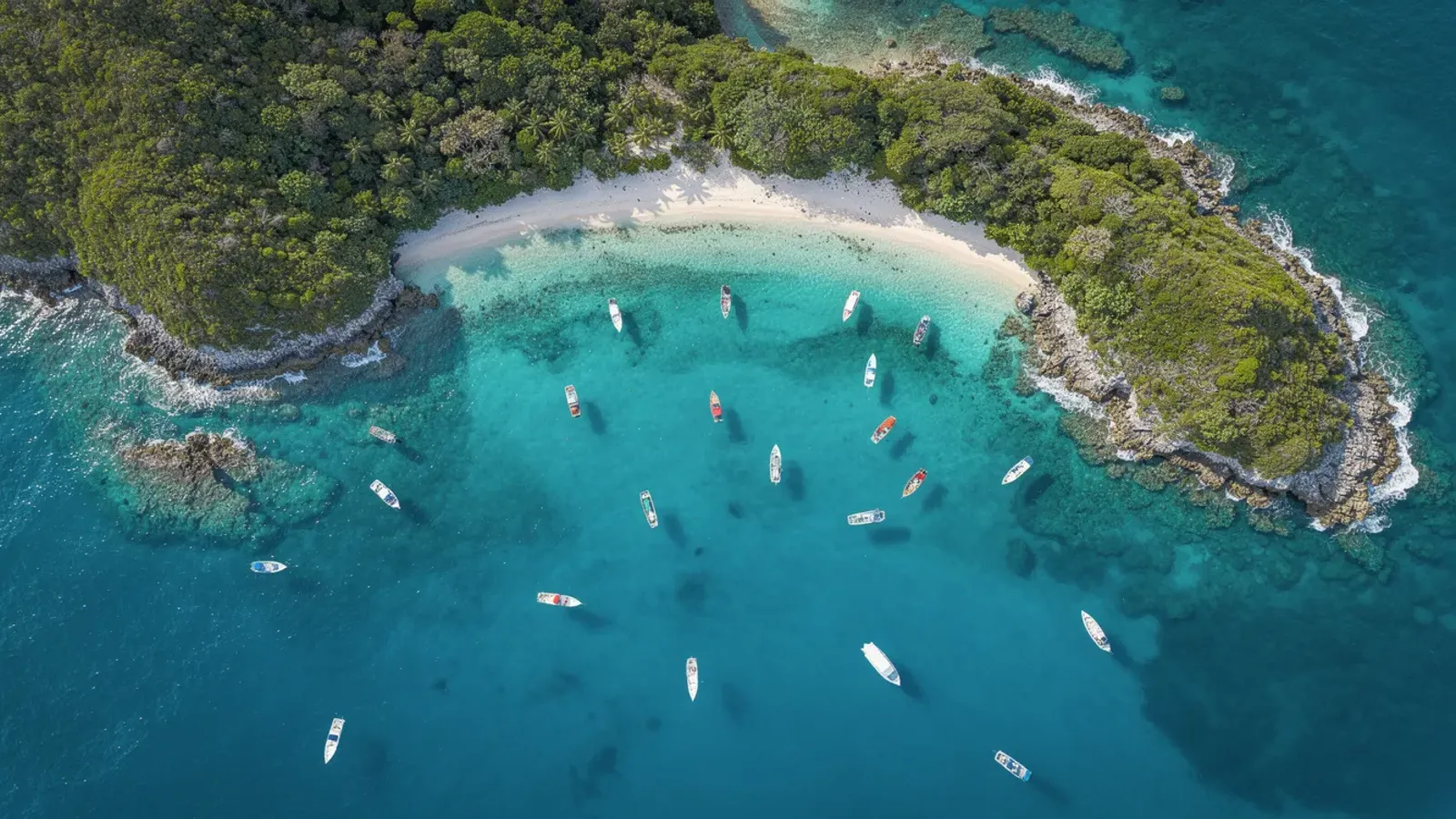 Samaná bay. Four to five hours from Punta Cana, and worth staying over rather than day-tripping.
Which car
A small sedan handles every paved route in this article, including the drive to Santo Domingo.
Get the ground clearance if your plan includes Miches, the mountains, or anything described to you as “a track”. It isn’t about mud; it’s about those unpainted speed bumps and the drainage channels cut across village roads. There’s a full comparison in the SUV guide.
How we do it
Local company, Punta Cana, Bávaro, Cap Cana and PUJ. Insurance, taxes and unlimited mileage are in the quoted rate. Delivery is $20 to the airport or the resort zone, $40 to Macao and Uvero Alto, $60 flat between 22:00 and 08:00. No credit card needed to book. Child seats free; Wi-Fi hotspots available.
The limitation, so it’s on the record: we’re Punta Cana only, the car returns where it started, and there are no one-way rentals to other cities.
Airport pickup specifics are in the PUJ guide, and you can send dates and a flight number on WhatsApp.
Ready to hit the road?
Rent a car in Punta Cana with no hidden fees — full insurance and unlimited mileage included.
Search cars for your trip